

Red Light Therapy at Home: Your Daily Wellness Ritual
The spa appointment you keep meaning to book? The clinic visit that requires an hour you don't have? Red light therapy doesn't need to live there anymore. It's moved into homes, showing up in devices you can use while you answer emails or wind down for bed. No appointment needed, no commute required. Just a few minutes a day, right where you already are.
What Makes Red Light Therapy Work at Home
Red light therapy uses specific wavelengths of light, typically between 630 and 850 nanometers, to reach your skin and tissue. It's not heat you feel directly, though some devices add warmth as a separate feature. The light itself does the work at a cellular level, and that's what makes it different from a regular lamp or heating pad.
Home devices deliver the same core technology found in professional settings, just in a format designed for daily use. Research shows that consistency matters more than intensity for most people. A ten-minute session every day beats an occasional hour-long clinic visit.
The Science Behind the Red Glow
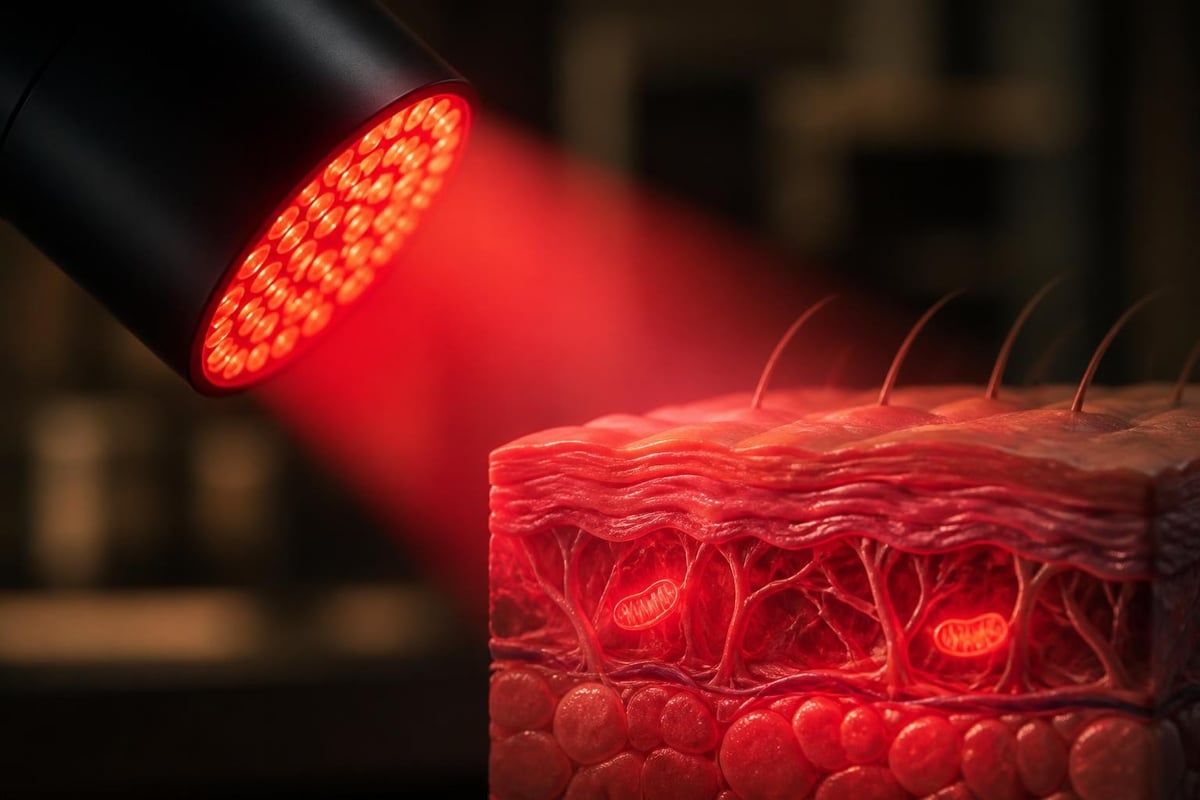
When red and near-infrared light reaches your cells, it interacts with mitochondria. Think of it as giving your cells a little energy boost. That process supports how your body naturally maintains skin appearance and muscle recovery after activity.
But here's the thing: not all home devices are built the same. According to experts, the effectiveness depends on several factors:
- Wavelength accuracy: Devices should specify exact nanometer ranges
- Power output: Measured in milliwatts per square centimeter
- LED quality: Clinical-grade LEDs vs. decorative lights
- Treatment area size: Larger areas need more LEDs for even coverage
You're not looking for the brightest device. You're looking for the right wavelength at the right intensity.
Setting Up Your Home Routine
Red light therapy at home works best when it becomes as automatic as brushing your teeth. The ritual matters as much as the technology.
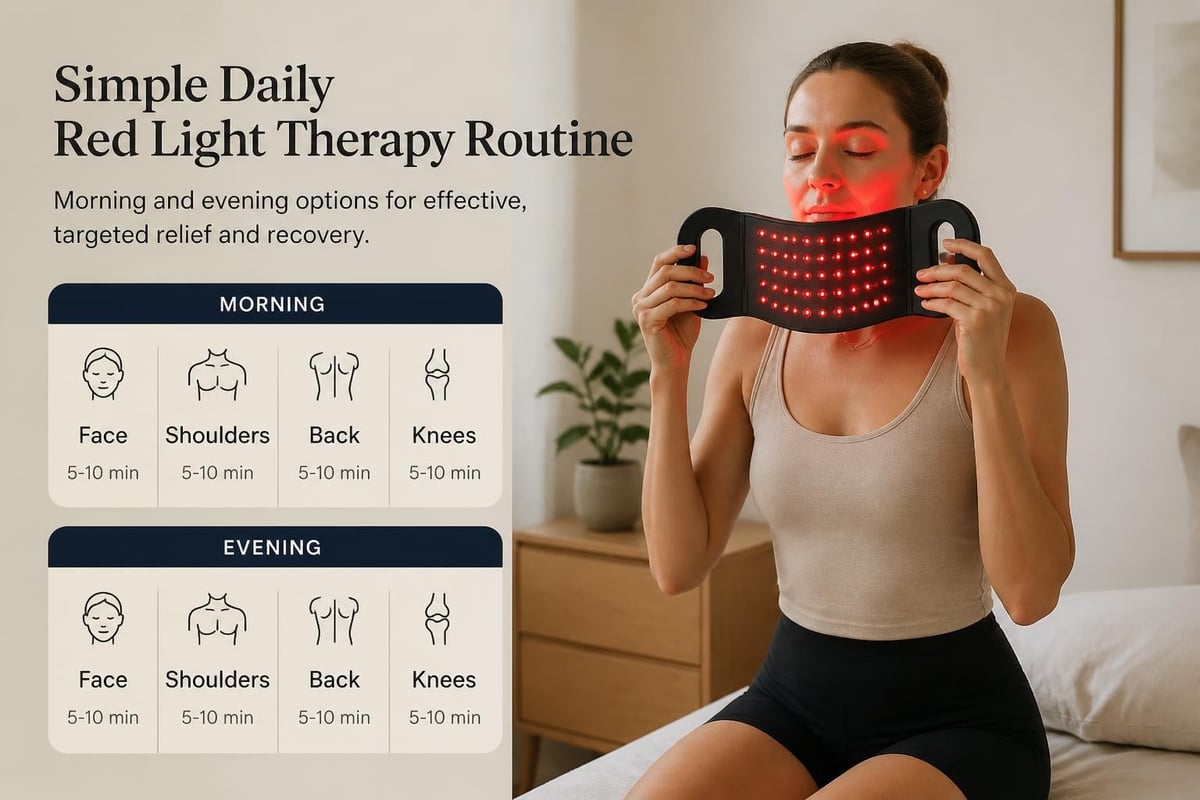
Most people start with five to ten minutes per session. You can use it in the morning to ease into the day or at night as part of winding down. Some devices are hands-free, others you hold or position near specific areas.
Where to Use It
Target areas depend on what you're addressing. For skin, people often focus on the face and neck. For body wellness, common spots include:
- Lower back after long desk hours
- Shoulders and neck from tension
- Knees after workouts or activity
- Hands and wrists from repetitive tasks
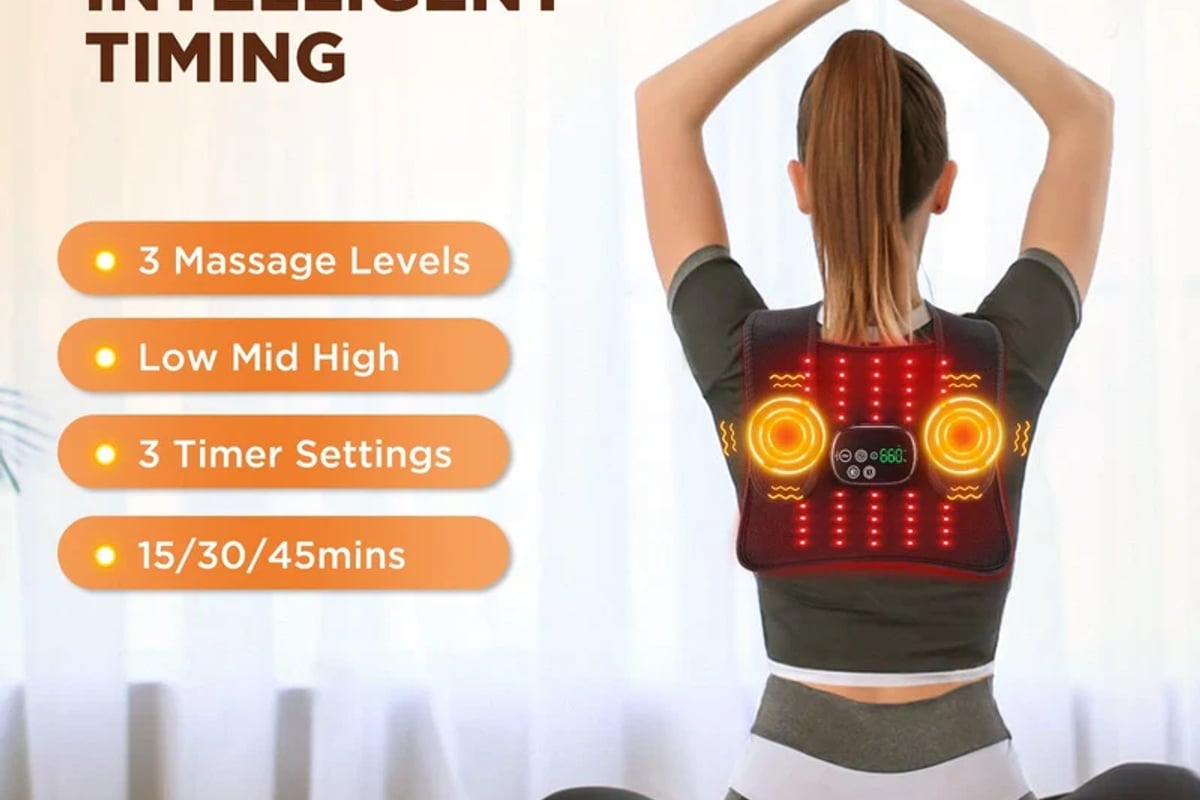
The Infrared Red Light Therapy Belt wraps right around your lower back or waist, combining far-infrared heat with red light in a format you strap on and forget about. Two adjustable straps, 46 red light beads, and warmth that works while you sit or move around.
Distance matters too. Most devices work best between six and twelve inches from your skin. Too far and the light disperses before it reaches tissue. Too close and you're wasting coverage area. Check your specific device guidelines, but that range holds for most quality equipment.
What to Expect from Daily Sessions
Results don't show up overnight, and that's actually normal. Red light therapy at home is a cumulative process. Most people notice changes around the four to six week mark with consistent use.
For skin, you might see a smoother texture or more even tone. For body areas, many users report feeling less tension after regular sessions. But you won't cure anything, and anyone promising dramatic overnight changes is overselling.
| Timeframe | What People Typically Notice |
|---|---|
| Week 1-2 | Getting into the routine, minimal visible changes |
| Week 3-4 | Slight improvement in how skin looks or how body feels |
| Week 6-8 | More noticeable support for skin appearance and muscle comfort |
| Week 12+ | Cumulative benefits with ongoing use |
Safety considerations include protecting your eyes during facial sessions. Some people close their eyes, others use goggles. Neither the light nor the warmth should cause pain. If it does, you're either too close or the device isn't right for you.
Building the Habit
The hardest part isn't using the device. It's remembering to use it. Here's what actually works:
- Pick one time: Same time every day beats random sessions
- Stack it: Add it to something you already do (morning coffee, evening routine)
- Make it visible: Keep the device where you'll see it
- Track it simply: Mark a calendar or use your phone
You're creating a wellness ritual, not adding a medical treatment. The difference matters for how you approach it mentally.
Choosing the Right Device for Your Needs
Home red light therapy devices come in different formats. Panels work for larger areas like the back or full face. Wraps and targeted devices handle specific spots like knees, hands, or shoulders. Masks focus exclusively on facial skin.
According to skincare experts, masks deliver concentrated coverage for facial concerns, but they only address one area. If you deal with both skin and body tension, you might need more than one device type.
Consider these factors before buying:
- Your primary concern: Skin appearance vs. muscle tension vs. both
- Treatment area: Face only, specific body parts, or multiple zones
- Portability: Stationary panels vs. wearable devices
- Added features: Heat, massage, adjustable intensity
- Budget: Quality devices range from $100 to $500+
Cheaper devices often lack proper wavelength specs or adequate LED count. You don't need the most expensive option, but you do need one that lists specific technical details. If a product page doesn't mention wavelengths or power density, keep looking.
Combining Heat and Light
Many modern home devices pair red light with heat because they work well together. Heat increases circulation while red light does its cellular work. The combination feels more soothing than light alone, especially for body areas holding tension.
Research on light therapy shows different wavelengths target different concerns. Red light (around 630nm) stays closer to the surface, working with skin. Near-infrared (around 850nm) penetrates deeper into tissue. Quality devices often include both.
For daily use, warmth makes the experience more pleasant. It's the difference between a clinical treatment and a ritual you actually look forward to. That psychology matters when you're trying to build a consistent habit.
Integration with Other Wellness Practices
Red light therapy at home doesn't replace other healthy habits. It complements them. People combine it with:
- Stretching or yoga: Use the device during or after sessions
- Meditation: Let the warmth and light enhance relaxation
- Skincare routines: Apply serums after red light for better absorption
- Post-workout recovery: Target muscles within an hour of exercise
Think of it as one tool in your overall approach, not a magic solution. Rituelle's approach centers on this honest perspective: simple devices for daily use that support how your body already works.
Making It Work Long Term
The people who see the best results from red light therapy at home are the ones who stick with it past the initial enthusiasm phase. That means making it genuinely easy and enjoyable.
Keep sessions short. Ten minutes is enough for most applications. Longer doesn't necessarily mean better, and if sessions feel like a chore, you'll skip them.
| Session Length | Best For | Frequency |
|---|---|---|
| 5 minutes | Facial skin, small areas | Daily |
| 10 minutes | Full face, targeted body spots | Daily |
| 15 minutes | Larger body areas, multiple zones | 5-6 times per week |
| 20+ minutes | Usually unnecessary for home use | Not recommended |
Maintenance matters too. Clean LED surfaces regularly with a soft cloth. Store devices properly between uses. Check manufacturer guidelines for any specific care instructions. A well-maintained device lasts years, making the initial investment worthwhile.
Some people rotate through different devices depending on the day. Face mask on Monday and Thursday, back wrap on workout days, knee support after long runs. There's no single right pattern. What matters is finding what fits your actual life, not an idealized version of your routine.
Red light therapy at home succeeds when it becomes part of your day, not an extra task competing for time. Five to ten minutes of red light and warmth, targeted where you need it, builds over weeks into something you notice. Whether you're addressing skin appearance, easing tension from desk work, or supporting recovery after activity, the ritual itself matters. Rituelle designs devices for exactly this: the kind of wellness support you'd find at a clinic or spa, simplified into something you use at home while life happens around you.