

Red Light Belt vs Panel: Which Device Fits Your Routine?
You've probably noticed red light therapy showing up everywhere lately. Spas, wellness clinics, even your Instagram feed. And now you're looking at options for home use, wondering if you should grab a belt or go for a panel. It's a fair question because the red light belt vs panel decision really comes down to how you live, where you carry tension, and whether you'd rather wrap something around you or stand in front of it for a few minutes a day.
How Belts and Panels Actually Work
Both devices use the same core technology. Red and near-infrared wavelengths penetrate the skin, where cells absorb them during a process called photobiomodulation. Your mitochondria use that light energy to produce more ATP, which is basically cellular fuel.
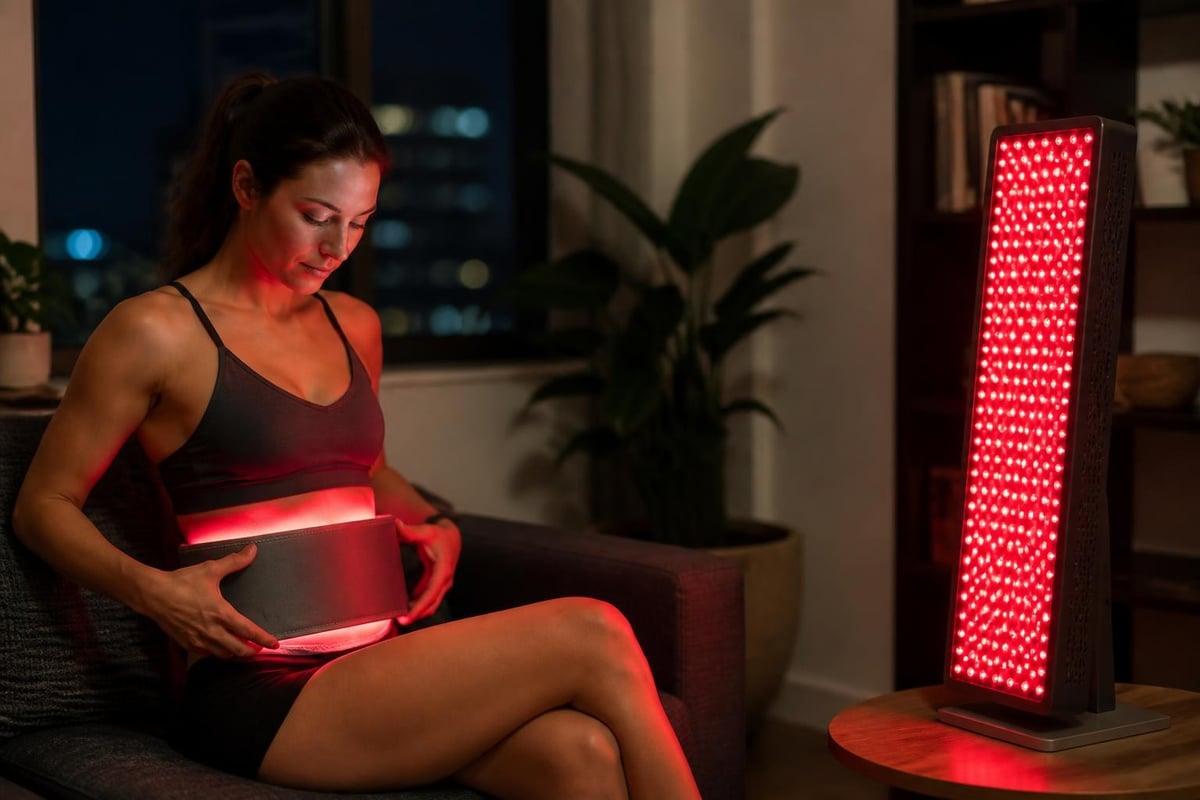
Belts wrap around specific areas like your lower back, knees, or shoulders. They usually combine red light LEDs with far-infrared heat, creating a warming effect while delivering wavelengths in the 630-850nm range. You strap them on, adjust the fit, and go about your business.
Panels mount on a wall or stand on the floor. You position yourself in front of them, usually 6-12 inches away, for targeted sessions. They cover larger surface areas and often pack more LEDs, which means higher power output across a broader zone.
The differences in coverage and positioning between these formats shape how you'll actually use them.
Where Belts Make More Sense
If you carry tension in predictable spots, a belt delivers concentrated attention right there. Lower back after sitting all day? Wrap it. Shoulders tight from laptop posture? Same idea.
Portability is the other big win. You can:
- Use it while you're cooking dinner
- Wear it during your commute (if you're not driving)
- Pack it in your suitcase without losing half your luggage space
- Move from room to room without mounting hardware
The Infrared Red Light Therapy Belt combines warmth and red light in a design that wraps around wherever you need it, whether that's your lower back or waist. It's the kind of thing you strap on while you answer emails or fold laundry.
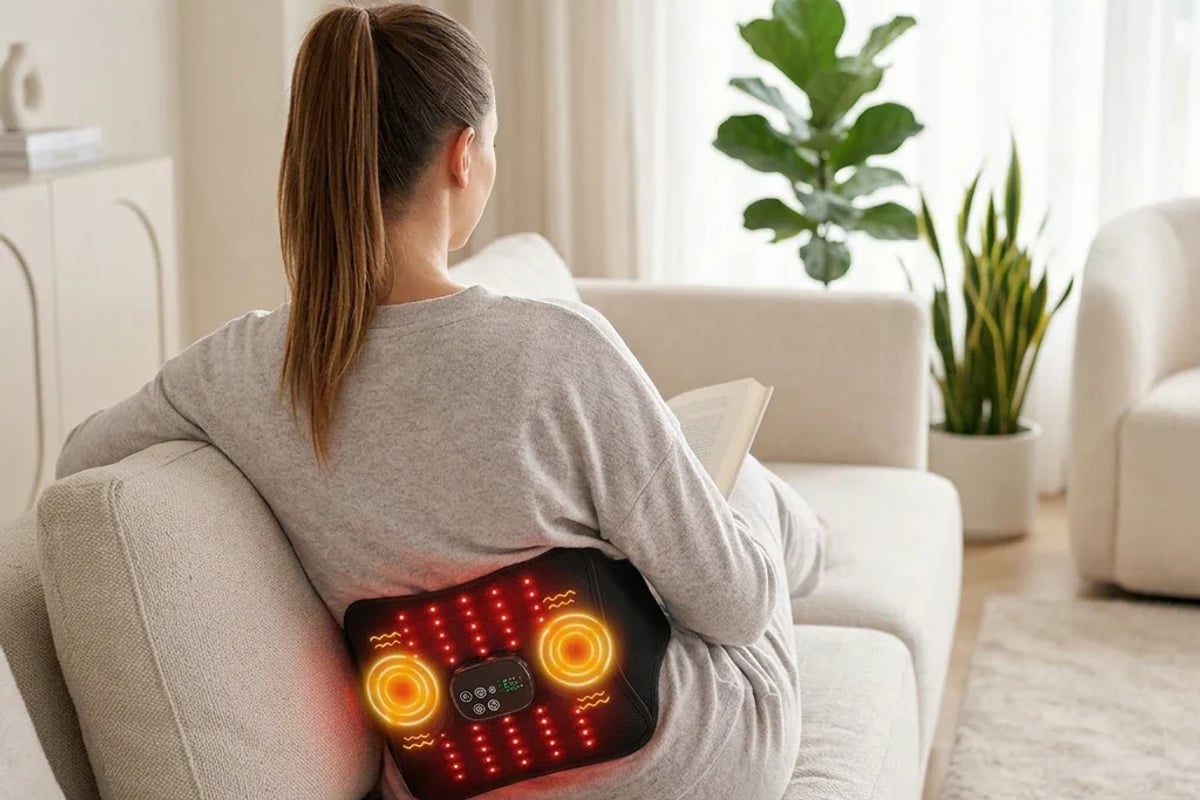
Sessions typically run 10-20 minutes. The heat adds an immediate soothing sensation that panels don't provide, which some people find makes the routine more comfortable. But you're limited to the body parts the belt can physically wrap around, which rules out areas like your face or full torso.
When Panels Take the Lead
Panels work better when you want broader coverage or you're targeting multiple areas in one session. Standing in front of a panel for 10-15 minutes can cover your entire back, chest, or legs at once.
Power output tends to be higher too. Where belts might deliver 20-40mW/cm² at the skin, quality panels can push 100mW/cm² or more, depending on your distance. That increased intensity can mean better coverage for certain applications.
Key Panel Advantages
| Feature | Benefit |
|---|---|
| Higher irradiance | More light energy delivered per session |
| Larger treatment area | Cover back, legs, or multiple zones simultaneously |
| Hands-free positioning | Stand, sit, or lie down during sessions |
| Facial treatments | Position at face level for skin-focused routines |
The tradeoff is commitment. You need wall space or floor space, and you can't multitask as easily. Your session is dedicated time, not something you do while making breakfast. For people with understanding of how red light therapy works, panels offer a more clinic-style experience at home.
The Practical Differences That Actually Matter
Let's talk about the stuff that affects whether you'll actually use the thing. Because buying a device you never turn on helps nobody.
Setup time matters more than you'd think. Belts are instant. Panels require positioning, maybe adjusting a stand, definitely standing still. If you've got five minutes between calls, the belt wins. If you've got a dedicated morning routine, panels fit better.
Heat is another split. Belts typically include far-infrared heating elements, creating warmth that feels immediately soothing on tight muscles. Panels emit some warmth from the LEDs themselves, but it's gentler and not the primary function. For someone dealing with desk-day tension, that concentrated heat can be the deciding factor.

The design and portability differences extend to storage too. A belt rolls up and fits in a drawer. A panel needs permanent or semi-permanent real estate in your space.
Cost and Commitment Considerations
Belts generally run $150-400, depending on features and LED count. Panels start around $200 for smaller units but can easily hit $800-1,500 for larger, higher-powered models. If you're testing the waters with red light therapy, belts offer a lower entry point.
But there's value in versatility. A quality panel can serve multiple family members for different purposes. Face in the morning, back in the evening, legs after a workout. Belts are more specialized, which is perfect if you know exactly what you're targeting but limiting if your needs vary.
Decision Framework
Consider a belt if you:
- Target specific areas consistently (lower back, knees, shoulders)
- Want portability and multitasking ability
- Prefer warmth combined with light therapy
- Have limited space for wellness equipment
Consider a panel if you:
- Want full-body or multi-area coverage
- Have dedicated wellness time in your routine
- Prioritize higher power output
- Include facial treatments in your goals
Neither option is objectively better. The red light belt vs panel question resolves when you match the format to your actual routine, not your ideal one. The device you'll use consistently beats the more powerful one gathering dust.
Real-World Usage Patterns
Talk to people who own both, and you'll hear the same thing. They use them differently. The belt comes out during the workday, during TV time, while they're doing other things. The panel gets morning or evening sessions when they can stand still for 15 minutes.
Some folks start with a belt for a specific issue, then add a panel later when they want to expand their routine. Others go panel-first for versatility, then grab a belt for on-the-go convenience. There's no wrong path, just different entry points.
The best red light therapy products for you depend on factors like your space, budget, and how therapy fits into your day. If you're someone who struggles with consistency, the easier-to-use option wins even if it's technically less powerful.
Wavelength and Safety Considerations
Both formats should deliver wavelengths in the therapeutic range: 630-660nm for red light and 810-850nm for near-infrared. Check the specs before buying because some cheaper devices don't actually hit these ranges effectively.
Safety-wise, both are low-risk for most people. The main rules apply equally:
- Don't stare directly into LEDs
- Start with shorter sessions (5-10 minutes)
- Watch for skin sensitivity, especially with heat
- Skip it if you're photosensitive or taking photosensitizing medications
Belts with heating elements add one consideration: temperature. Most max out around 140°F, which is warm but not burning. Still, if you have reduced sensation in an area or circulatory issues, panels might be the safer choice since they don't add direct heat.
The red light therapy benefits for skin and body tissues come from consistent use at appropriate wavelengths, not from choosing the "right" format. Both can deliver results when used properly.
The red light belt vs panel decision really boils down to how therapy fits into your actual life, not how you wish your routine looked. If you're dealing with everyday tension from long desk days or workouts and want something simple you'll actually use, Rituelle offers red light and heated massage devices designed for exactly that: five to ten minutes a day, at home, wherever you need it most.