

Face Red Light Mask: Benefits, Usage, and Real Results
The skincare industry has witnessed a significant shift toward at-home treatments that once required professional visits. Among these innovations, the face red light mask has emerged as a popular tool for those seeking to support their skin's natural radiance without booking spa appointments. These devices deliver specific wavelengths of light directly to your face, and the science behind them is actually quite fascinating.
Understanding How Red Light Technology Works
Red light therapy operates within a specific wavelength range, typically between 630 and 850 nanometers. When these wavelengths penetrate your skin, they interact with mitochondria in your cells. Think of mitochondria as tiny power plants that produce energy for cellular functions. Red light therapy helps stimulate this energy production, which can support various skin processes.
The technology isn't new. It was actually developed by NASA in the 1990s for plant growth experiments in space. Scientists noticed that the red light wavelengths also appeared to promote wound healing in astronauts. That discovery sparked decades of research into how these wavelengths might benefit human tissue.
The Science Behind Cellular Response
Your skin cells contain chromophores, which are light-absorbing molecules. When red light hits these molecules, it triggers a cascade of cellular responses. The process can support the production of ATP (adenosine triphosphate), which is essentially cellular fuel.
But here's where it gets interesting. This increased cellular energy may help support collagen production, which naturally decreases as we age. Research suggests that consistent use of red light therapy can contribute to a more youthful appearance by supporting your skin's natural regeneration processes.
What Sets a Face Red Light Mask Apart
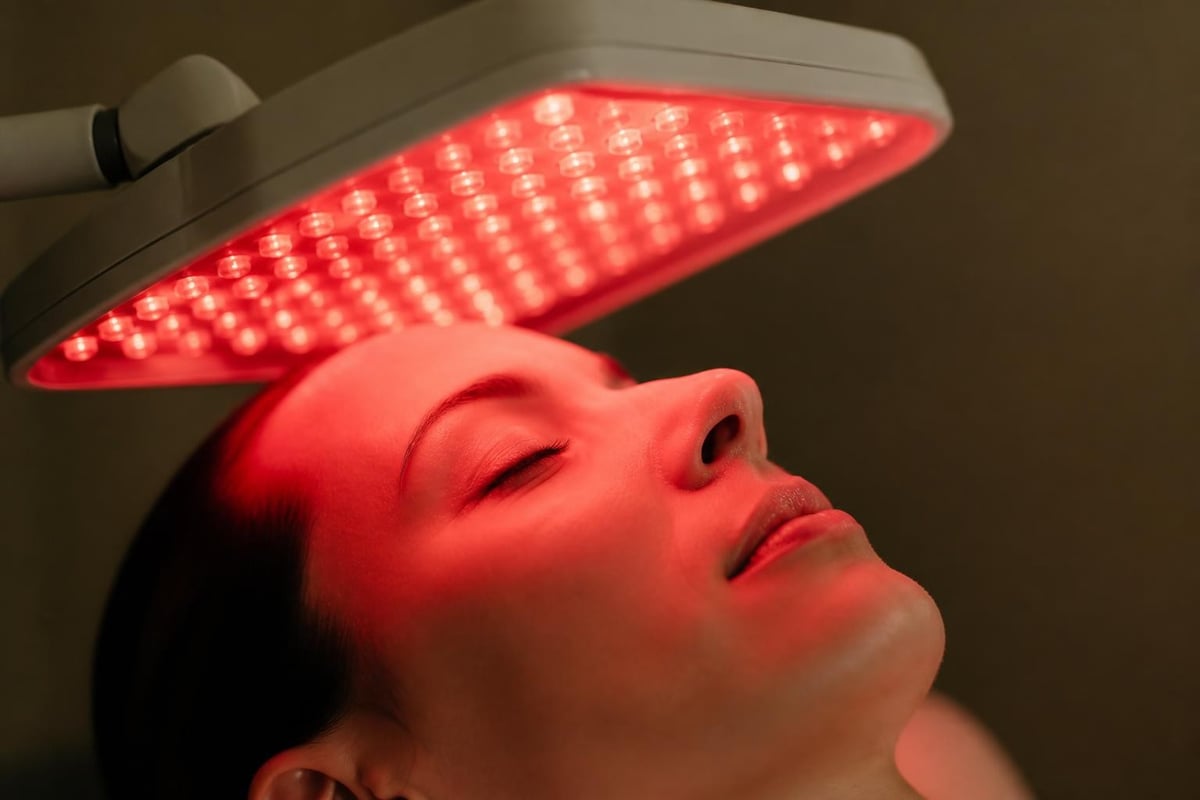
Unlike handheld devices or larger panels, a face red light mask is designed to deliver light evenly across your entire face. The hands-free design means you can relax, read, or even meditate while using it. Most masks feature LED bulbs positioned strategically to ensure consistent coverage from your forehead down to your jawline.
The convenience factor can't be overstated. You're looking at sessions that typically last between 10 and 20 minutes. That's shorter than most face masks, and you don't need to wash anything off afterward.
Key Features to Consider
When evaluating different options, you'll want to pay attention to several factors:
- Wavelength range: Look for devices that specify their wavelength output (630-850nm is ideal)
- Number of LED bulbs: More bulbs generally mean better coverage
- Treatment modes: Some masks offer multiple light colors for different purposes
- Build quality: Lightweight, comfortable designs make regular use easier
- Power source: USB-powered options offer more flexibility than battery-operated ones
| Feature | Why It Matters | What to Look For |
|---|---|---|
| Wavelength | Determines penetration depth | 630-850nm range |
| LED Count | Affects coverage uniformity | 100+ bulbs preferred |
| Session Time | Impacts convenience | 10-20 minutes typical |
| Comfort | Ensures consistent use | Adjustable, lightweight design |
Incorporating Red Light Sessions Into Your Routine
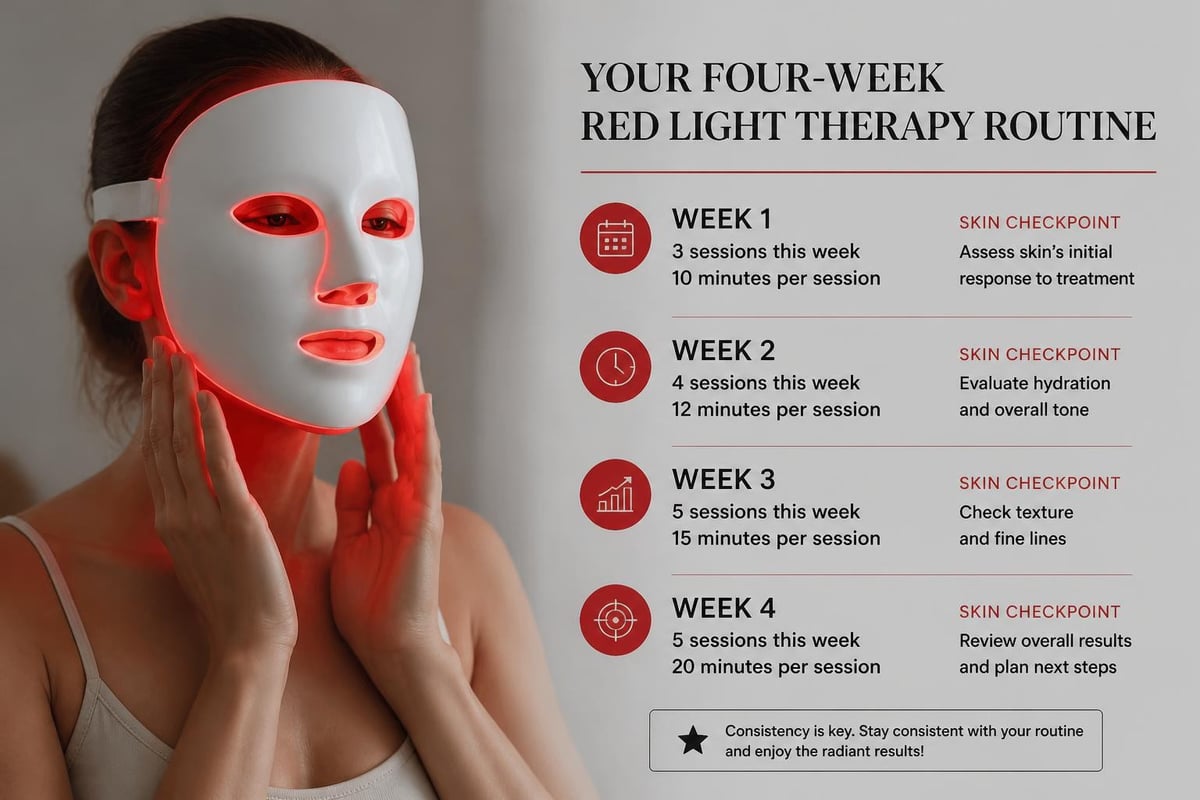
The biggest mistake people make? Inconsistency. Most dermatologists recommend using a face red light mask at least three to five times per week for optimal results. Think of it like going to the gym. One session won't transform you, but regular commitment can make a noticeable difference.
Start with clean, dry skin. You don't need to apply any products beforehand, though some people prefer to use their treatments afterward when their skin might be more receptive. Position the mask comfortably on your face and relax for the duration of your session.
Building a Sustainable Schedule
Here's a practical approach that works for many people:
- Choose consistent days (Monday, Wednesday, Friday works well)
- Set a specific time (morning sessions can energize, evening sessions can relax)
- Create a comfortable environment (good lighting, relaxing music optional)
- Track your sessions for the first month to establish the habit
- Take progress photos every two weeks to monitor changes
You won't see dramatic overnight changes. That's not how cellular processes work. Most people report noticing improvements in skin texture and tone after four to six weeks of consistent use. Some notice subtle changes sooner, while others take a bit longer. Your skin's baseline condition and age play a role in how quickly you might observe results.
Safety Considerations and Realistic Expectations
Red light therapy is generally considered safe for most people. Consumer Reports notes that serious side effects are rare, but there are still some important guidelines to follow. If you have photosensitivity issues or are taking medications that increase light sensitivity, consult with a healthcare provider first.
The devices don't emit UV light, which is what causes sunburn and increases skin cancer risk. That's a crucial distinction. You're getting specific wavelengths that support cellular function without the harmful effects of UV exposure.
What Results You Might Actually See
Let's be honest about expectations. A face red light mask isn't going to erase deep wrinkles or completely transform aging skin. What it can do is support your skin's natural processes and potentially enhance the appearance of:
- Skin texture and smoothness
- Overall tone and radiance
- Fine lines around the eyes and mouth
- Temporary redness or minor irritation
Many users at Rituelle appreciate how professional-grade light therapy fits seamlessly into their existing routines. The devices are designed for home use but built with the same attention to quality you'd expect from professional equipment.
Comparing Masks to Other Light Therapy Options
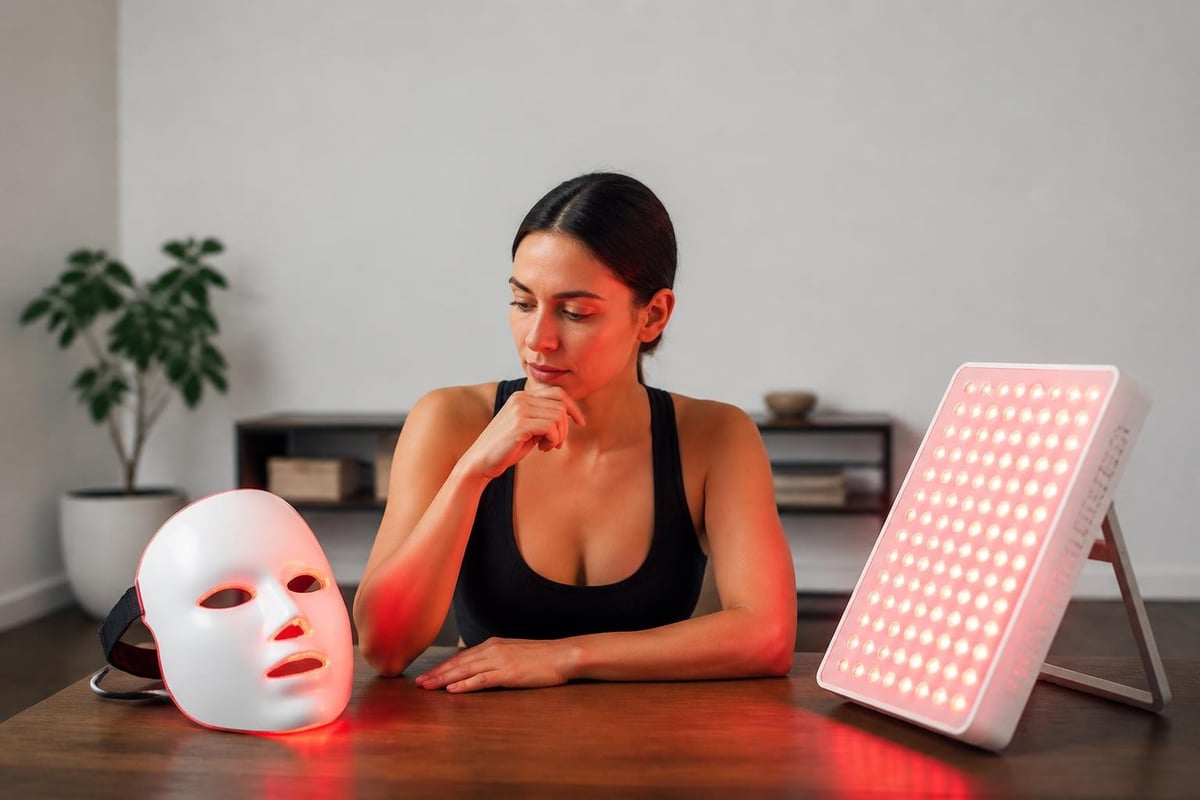
You've probably seen red light therapy panels and wondered how they differ from masks. The main distinction comes down to targeted treatment versus full-body coverage. Panels are larger and can treat your face, neck, chest, and other areas. Masks focus exclusively on facial skin.
Masks offer advantages in convenience and consistency. The fixed distance between the LEDs and your skin ensures you're getting the optimal intensity every session. With panels, you need to position yourself correctly each time, and it's easier to inadvertently move too close or too far away.
Price and Value Considerations
Investment in quality matters here. TIME magazine's research suggests that while professional treatments can cost $200-$300 per session, a good at-home device pays for itself after just a few uses compared to salon visits.
Budget options exist, but they often compromise on LED quality, wavelength accuracy, or durability. A well-made face red light mask should last years with proper care, making it a worthwhile long-term investment in your skincare routine.
Maximizing Your Investment
Once you've committed to adding this technology to your routine, you'll want to get the most from it. Here are some strategies that actually work:
Pair it with quality skincare products. While you don't need anything special before your session, applying serums or moisturizers immediately after may help with absorption when your skin is in that receptive state.
Stay hydrated. Cellular processes work better when you're properly hydrated. It sounds simple, but it makes a difference.
Be patient and consistent. This is probably the most important point. Understanding how often to use LED devices and sticking to that schedule separates people who see results from those who don't.
The technology behind a face red light mask represents years of scientific research translated into a format you can use at home. It's not magic, and it won't replace a comprehensive skincare routine or healthy lifestyle habits. But as one component of your overall approach to skin wellness, it offers a science-backed method for supporting your skin's natural vitality.
A face red light mask represents a practical way to bring professional-level light therapy into your daily routine without the cost and inconvenience of salon visits. By understanding the science, maintaining consistency, and setting realistic expectations, you can make the most of this technology. Rituelle offers professional-grade red light therapy devices designed specifically for home use, combining science-backed technology with the convenience you need. Plus, a portion of every sale supports breast cancer research, so you're investing in both your wellness and meaningful causes.